Monday, May 18, 2015

Science behind Baptism

Ever wonder that there is a scientific aspect to baptism ?? To understand the concept thoroughly, let's start with the basic concept of science i.e. three states of matter namely:

1) Solid
2) Liquid
3) Gas

But a Lehman may not be aware of the other states of matter that exist in the universe. These states are named as:

4) Plasma
5) Ether

Plasma in most general terms is defined as a gas that has been energized to the point that some of the electrons break free from, but travel with, their nucleus. Gases can become plasmas in several ways, but all include pumping the gas with energy. A spark in a gas will create a plasma.


Now, ether in scientific terms is described as an oxygen atom bonded with two hydrocarbons. In scientific terms, it is described as:

1) A classical physical element, considered as prevalent in the heavens and inaccessible to humans. In some versions of alchemy, this was the fifth element in addition to air, earth, fire and water.
2) (archaic, physics, uncountable) A substance (aether) once thought to fill all space that allowed electromagnetic waves to pass through it and interact with matter, without exerting any resistance to matter or energy. 

Ether is usually referred to as "Amrit Rass" in Sikhism and Hinduism.


Though, Albert Einstein disproved the presence of Ether in his "Theory of Relativity" by showing that the speed of light in vacuum is exactly the same as in some other medium. Though this theory of Einstein may discard the presence of any such element but his "Theory of Everything" (close to Guru Nanak's words of "Ik Onkaar") does give some margin to believe in the existence of spirituality and metaphysics.

Now my personal deduction on this entire process is that a Bulgarian philosopher called Omraan Mikhael Aivanhov in his books did emphasize on this transition of the matter from one state to another as from Solid => Liquid => Gas => Plasma => Ether. He illustrated this transition by the simple phenomenon of ingestion of food where he said the one mouthful of bread can produce the energy to pull a hundred wagons around the world thrice.

Though Baptism somehow is considered to happen in the spiritual realm in every religion, I believe that it happens naturally in the Cosmos as well. If we consider the ceremonial aspect of baptism which is present in every religion in the world, "water" is the element used in every baptism ceremony across various religions e.g. "Holy water" in Christianity, "Zam Zam"  in Islam, "Amrit Sanchaar" in Sikhism, "Mata rani da chhita" (for Durga-worshippers) in Hinduism etc. Now this ceremony is just another ceremonial/ symbolic display of that conversion of the matter to ether or simply based on an individual's personal experience that enlightens him/ her about the existence of such phenomenon, about the conversion of matter from one state to another, in the universe.

What your physical body is today was "zygote", a liquid formed by the fusion of sperm and ovum once and the day when it gets cremated, the flesh will melt into liquid in the first instance. So the bi-directional transition i.e. Liquid=> Solid => Liquid is clear. Maybe, the entire chain of the material transition is bi-directional and is centered around ether as:

Solid=> Liquid => Gas => Plasma => ETHER => Plasma => Gas => Liquid => Solid

This may not be a standard deduction but more of my imagination somehow supported by a geographical phenomenon called the "Water cycle". In the end, I would just say that we must keep alive our spirit of mysticism because that would unveil many things we wish to know in our life time.

Tuesday, May 5, 2015

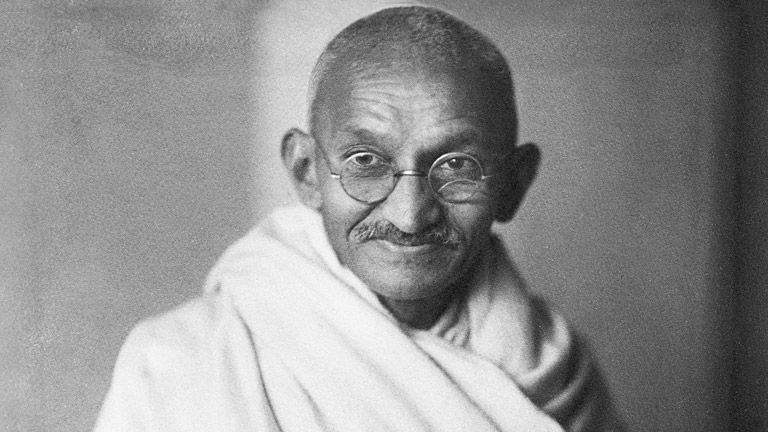
Guru Arjan Dev- Gandhi's inspiration

Actually, there are no written records available to substantiate the fact that Mahatma Gandhi's ideologies have a considerable influence of Guru Arjan Dev ji's teaching's. Though Sikhs, especially youth are considered to be against Gandhi's ways out of an assumption that, by default, they are aggressive and rebellious. But there are some noticeable similarities between their ideologies that cannot be ignored. Though, this comparison may itch a sikh fundamentalist and gandhian too may find it a little uncomfortable to digest but this is the truth.

Though Gandhi always advocated simplicity, selflessness, non-violence etc. but the fifth sikh guru went too far ahead of Gandhi in not only preaching it but also practicing it. There's no bigger example of patience, tolerance, self-sacrifice and surrender to almighty's will, than the martyrdom of Guru Arjan Dev but Gandhi's teachings are no more than a reflection of Guru Arjan's in a different century.
Though, it would be idiotic to compare the stature of a political personality to that of a spiritual guru who is more of a messiah than a just a political leader, I still want to put forward this comparison in an attempt to pacify sikh radicals and anti-sikh forces operating in India. Though some intellectuals can very well prove the anti-sikh nature of Gandhi but let's not look at him for only religious perspective but also from political and nationalistic view.


But a fact worth mentioning here is that I want to put forward a striking similarity between Gandhi's and Guru Arjan's political ideology which are almost identical.
Fifth Guru has said:

ਰਾਜ ਬਿਨਾ ਨਹੀਂ ਧਰਮ ਚਲੈ ਹੈਂ ॥ ਧਰਮ ਬਿਨਾ ਸਭ ਦਲੈ ਮਲੈ ਹੈਂ ॥
which is very Similar to Gandhi's thought:

"Politics bereft of religion is the death of conscience."

So! I believe such an analogy has never been made by any religious preacher or a political leader in the past, anywhere in the world. Those people like me, who believe in communal harmony and universal brotherhood should come up with more such analogies to defeat religious fundamentalism which is one big reason behind communal tensions in the country.

Saturday, May 2, 2015

"Bhapa"- an offensive & derogatory term for sikhs

I have already covered the existence and operationality of caste discrimination in my article "Caste System in Sikh community" where I highlighted the major caste types in Punjab. Though personally a strong critic of the "Caste system" and an individual who is always against caste-bias, I feel an utmost need to address this issue in my writings as it is a harsh social reality and truth about it should not be left unsaid. As the title suggests I will try to highlight the discriminatory use of the term "Bhapa" and the historical aspects of this caste.

In the cities, Khatri and Arora dominate the sphere of business activities. Khatri and Aroras are essentially identical caste and are primarily a caste of traders, shopkeepers and accountants. Sometimes people belonging to these castes are called "Bhapa Sikhs". Khatris and Aroras are equivalent of Baniyas found elsewhere in India. Please note there are also Agarwal Baniyas in Punjab too but they are almost 100% Hindu. All of the Sikh Gurus were born in Khatri caste. Guru Nanak's father Mehta Kalu was also a shopkeeper and he tried his best to make his son follow his caste profession of shopkeeping. But Guru Nanak rejected his teachings and became a man of spirit.

Please note that although the word Khatri appears to be a vernacular form of Sanskrit "Kshatriya", the caste is exclusively composed of cloth merchants, grocers, perfume sellers (or "Gandhis") and traders. Some eminent historians, have described this caste as probably a "pratiloma" or ritually inferior mixed caste created through union of "Kshatriya fathers and brahmin mothers" or "Shudra fathers and Kshatriya mothers". Though Rajputs , the bonafide Hindu Kshatriya caste, disown all connection with them and treat them as one of the Baniya castes, Aggarwal Baniyas, a reputable vaishya caste of Hindus, also deny any link with them.

Some speculate that the word Khatri is derived from the word "Khata" or accounting scroll . Before the partition of Punjab, Khatris were largely concentrated in West Punjab where they were the subordinates of Pathans and were employed in a rather humble way by Pathans as their accountants. It could be that Arora caste which came under patronage of Pathans and Khokhars in NWFP (North-West Frontier Province) and upper western Punjab as their accountants came to be called "Khatri" because of maintaining "Khatas" or accounting books of their patrons.

As stated before, sphere of Khatri and Arora influence in Punjab is the urban centers where they dominate the shopkeeping profession. Being connected with commerce and trading, their literacy rate is among the highest in Punjab and they were also the earliest beneficiaries of colonial education system being located in urban areas. Khatris are a forward caste in Punjab but as we have seen that neither their social standing nor their occupations are uniform across the country, it is no surprise that they are enlisted among Other Backward Castes (OBC) in many other states like Gujrat, Tamil Nadu, etc. Though Punjabi "Arora/ Khatri sikh" community has produced some of the most prominent political and religious personalities of the country like the former Prime Minister of India Dr. Manmohan Singh and the famous sikh scholar Giani Sant Singh ji Maskeen who has been honored with the "Panth Rattan" decoration. The famous Punjabi singer Daler Mehandi is also belongs to this caste.


Among the Dalit caste groups prominent ones "Chamars" and "Chooras". Both communities are called "Balmiki/ Mazhabi Sikhs". The word Chamar is derived from Charmakar or leather tanner. They used to be expert shoe-makers. Some poor men and women of this caste also work as laborers in the farms of traditional landowning castes like Jat, Mahton, Saini, etc. Discrimination against them unfortunately still exists in Sikh society. For this reason , Mazhbi Sikh brethren are extended reservation as SC (Scheduled Caste) . Mazbi Sikhs have in the past made sterling contribution to Sikhism both as mystics and soldiers. Bhagat Ravidas belonged to Chamar caste but is accorded highest respect in Sikhism with his poetry being included in Sri Guru Granth Sahib. Akali Phoola Singh wan another "Mazhabi Sikh" who acquired the top post of the "Akal Takhat Jathedar" and is known for his uprightness and bravery.

Now, I would like to use the reference of the historical aspect of "Balmiki/ Majhabi sikh" community and their socio-political and a legal achievement in the contemporary times to make the usage of the discriminatory term "Choora" as a  legal offense punishable as per the court of law. I expect some intellectuals from "Arora/ Khatri sikh" community to take a constructive lesson from the the B/M sikh brethren and pursue a legal/ political course to make the discriminatory usage of the term "Bhapa" too, a legal offence punishable in the court of law.


Tuesday, April 28, 2015

Hindus and Sikhs- Oneness and infighting

This is one of the most crucial and controversial topics of Indian politics. Though writing down about it on a blog may not get it the kind of attention that it deserves and may not be read with the seriousness  that it should be, but that won't stop me from verbalizing it for the greater good of the country and the humanity. It's a common century old phenomenon that Hindu radicals keeps on claiming the Hindutva of the sikh gurus on various grounds and sikh radicals keep on rubbishing their claims with their counter-arguments and we, the normal and the neutral Indians follow them blindly out of our faiths and get slaughtered for them like scapegoats, serving to the best of their vested interests.

I firmly believe that the normal citizens of the country shouldn't fight in the name of religion especially Hindus and Sikhs because there are dedicated militant organizations in both the communities who are solely prepared for this purpose. Hindus have their RSS, VHP, Bajrang Dal etc. etc. and sikhs have their Nihangs, Dal Khalsa, Taksalis and even SGPC task force can do the job of paid goons very well. So if there are such organizations present around you, who serve the purpose of conditioning tender minds to fight and die for religion till the last breath, then there's no point for a common man to pick up sword to protect his religion.

Even there are fanatic preachers in both the communities who make hollow predictions as "There won't be any sikh left one day and all the sikhs will come back to the hindu fold" or "One day the hindus will realize their mistakes and fall in guru's feet for repentance and convert to sikhsim".... Rubbish and Hilarious.... Isn't it ?? Though many of the radical Hindus try their level best to project Sikhism as the offshoot of Hinduism, there are Sikh radicals who try their level best to project Sikhism as a refined and a superior form of  Hinduism. If we just rubbish all these statements and try to be rational in addressing the issue, we can address it better if we try and figure it out from a socio-political perspective rather than a religious perspective.

Though I do not want to use that old reference of the word "Hindu" being a geographical term rather than a religious one, I just want to point out that fact that both the religions have emerged on their own and can take care of themselves, we just need to look after ourselves not our religions for that matter. I believe that the ultimate solution for Hindu and Sikh masses is peaceful coexistence. Because both these communities have diverted from their basic tenants if they introspect.


Where sikhs assume that hindus have snubbed them being a majority community in India and tried their level best to curb their separate and original identity, their real individuality, Hindus especially in Punjab accuse sikhs for alienation. Though, it may be in the best interest of the masses that the Article 25 of the constitution (which recoganizes sikhs as hindus) gets cancelled or repealed, but I feel that it may be in the best interest of the ruling class to keep the dilemma going in order to use the insecurity of "identity crisis" to bank on the sikh dominated vote bank in Punjab.

I have touched the issue of separate sikh identity in my article "Sehajdhari rights and sikh quota" but if such a law is passed it will have some ripple effects in the centuries old cohesive existence of the two communities. Honestly, being a liberal sikh, not associated with any radical or a separatist outfit, a law should be passed to establish the separate identity of sikhs, purely on humanitarian grounds. One has the right to be oneself and no one can take away his/ her individuality and religious identity is a vital part of a person's individuality and making it subservient to some other religious identity directly effects that person' zeal for life.

Though I have not mentioned about the work of a famous sikh encyclopedist Kahn Singh Nabha called "Hum Hindu Nahin" (Sikhs are not Hindus) written in 1898 whereby he technically proved by using references from both sikh and hindu scriptures that these are two different communities. But one thing is clear that this book is 117 years old and hasn't been able to achieve its objective yet in the Indian polity, then we can definitely say that either something is wrong with the book or something is wrong with the Indian polity ;-)

Jathedar- The CEO of Akal Takhat

That's not an odd comparison if you just make an effort to compare the Jathedar of a Takhat and the CEO (Chief Executive Officer) of an MNC (Multi-National Company). I'm doing it completely in the positive light as in my article "Cult leaders: The economic elites of Punjab", I proved that religion is also an industry like the other industries and people who have acquired offices in religious institutions ought to play a key role and discharge the duties attached to that office. CEO is one of top notch positions in an MNC just like the "Jathedar" in a religious institution called "Takhat" which is a temporal seat for co-ordination between religious and political affairs.

Just like the saying goes that,"With great power comes great responsibility", we can easily figure out that the job of a "Jathedar" isn't easy like that of a CEO. Though primarily associated with the policy-making, the nature of policies made by "Jathedars"(usually called "Singh Sahibaan" out of reverence by the sikhs) has to keep some very critical facts and conditions in mind before making a policy and issuing an edict or a diktat for the community across the globe to follow. These factors are:

1) Political pressure: "Jathedars" have to work in harmony with the govt. Majority of the Jathedars of the modern era succumb to the political pressure but there are examples of Jathedars like "Akali Phoola Singh" who dared to issue a diktat against Maharaja Ranjit Singh out of his multiple marriage alliances as this was against sikh tenants and the "tankha" (religious punishment) announced for Ranjit Singh was 20 slashes of hunter on his back and the Maharaja literally took it. Nowadays, the CEO's are also under immense political and market pressure to keep the organization going.

2) Dress Code: Just like a CEO adheres to a dress code like formals or semi-formals, Jathedars too have a dress code to adhere to. Though next generation CEO's like Mark Zuckerberg defies such protocols, the Jathedars too have somehow brought relevant changes in their dress-code to suit contemporary requirement. It's simple "kurta" & "chooridaar payjama" with a pointed turban nowadays unlike a "chola" and a "Dumala-dastaar" in the olden days.

3) Appeasement of radicals: Well, the CEO may not have to face any radicals or fanatics but he definitely has to figure out the institutional loyalty of his employees and act accordingly, similarly, for the "Jathedar" the fanatics and the radicals are the most loyal of the people associated with the institution and he cannot afford to make them angry as they have the militant like tendencies to rebel and the CEO has to make sure about the retention of institutionally loyal employees.

4) Projection of a universal image: Just like a CEO makes sure that the society in general, and not just employees, get benefited from his corporate house and launches various schemes in the name of "Corporate Social Responsibility", Jathedar also has to make sure that the projection of sikhism remains tolerant and universal and gives a nod to various philanthropic activities.

5) Carry forward the glorious legacy: Both the Jathedar and the CEO very well know that they are the temporary incumbents of their posts and the institution is above them, they have to make sure that the sanctity of the institution stays in tact. Both the seats are subject to corporate or a perpetual succession.


Though both these positions i.e. a CEO and a Jathedar are highly empowered and fetch immense social status and power, there is another aspect to it. Focusing wholly-solely on religious institution now, the Jathedar is also an ex-officio member of SGPC which is otherwise, a house of 180 members (now reduced due to the formation of separate SGPC by Haryana) democratically elected through adult franchise.

Now this is where the powers of a Jathedar take a jolt, when the decision on most of the financial matters are taken by the President of SGPC who is more like the MD (Managing Director) of all the gurdwaras falling under his jurisdiction. Actually, the SGPC President decides how much money should be spent on which project. Hence, the principle of "Unity of command" gets violated leaving a scope for the diversion and embezzlement of funds. Some intellectuals claim that the funds are used lesser for panthic or religious interests and more for the purpose of political party funding, hence going directly in the pockets of the ruling family of the state. And this is exactly what weakens the institution of "Akal Takhat".


This is the major grudge of the contemporary sikhs that "Akal Takhat" was above politics at the time of its establishment by the sixth guru, Sri Guru Hargobind Sahib ji. Acquisition of the post of Jathedar by religious leaders subservient to the politicians has immensely reduced the sanctity and the powers of "Akal Takaht" and has made it an institution inferior to even the ministerial positions of the state govt. Though I have used the picture of the incumbent Jathedar of Akal Takhat in my article but this is purely for reference purpose and not a personal attack.

As Punjabis or Indians, we are very well aware of the fact that extra-constitutional authorities operate in the Indian polity. I have already referred to such authorities in my other articles and if as sikhs we have failed to make "Akal Takhat" an authority of that stature then we need to introspect. What is holding us back ?? Have we failed to bring forward a 20th century leader and a strong individual like Giani Gurmukh Singh Musafir, who held various top positions i.e. of a Jathedar Akal Takhat, 3 time MP, CM of Punjab and Rajya sabha member in his lifetime. We need somebody who is religiously and constitutionally right to acquire this position and take the sikh community to the acme of glory.


Monday, April 27, 2015

Farmer Suicide menace in Punjab


Its always a matter of pride to associate yourself with a land that symbolizes divinity, culture, valour and abundance. This is exactly the same feeling that over-whelms us when we say that we belong to Punjab, the state known as bread-basket of India. The north Indian states of Punjab, Haryana and UP feed over 1.2 billion Indians. But now things are different as it is really hurtful to know the ground realities that have made Punjab a mere graveyard of the meek and helpless feeders of society. The issue that needs to be addressed immediately is unbelievably dreadful for the presenters in a way
that every single aspect verbalized on it resonates through the ears of the dead farmers and instead of acting as a sigh of relief for their dependents, it acts like salt over their wounds.

The Punjab that we all know, is no more the same place to live for those who're aware of the bitter truths of the faulty governance and inefficient administration. Rising above this blame game, it's a matter of those thousands of dead who've been victimized by either poverty or ignorance. Their plight never seems to be self-induced but exemplify the tyranny of suppressed class that has been the outcome of social evils like poverty, unemployment, illetracy, ignorance and social-stratification propagating through the ages.

Whether the Ministers in central govt. or state govt., Whether MP's or MLA's, Whether IAS or PCS officers. They all must realize that every moment wasted in exaggerating the issue about the causes, consequences and statitics is adding to the plight of the "have-nots"who've surrendered in front of the system which has taken away the lives of the bread-winners in their families. The lavish offices of beaureucrats and ministers, the legislative assembly of the state and the Parliament of India seems too far away for the poor farmers who've shed every drop of their sweat and blood to feed them.

There is an utmost need to awaken the entire nation about the fact that how can the starved bellies perform their jobs in the IT hubs, silicon vallies, Corporate offices, Flamboyant shopping malls, multiplexes or Special Economic Zones (SEZ's). Everyone needs food to live whether rich or poor, educated or illetrate. How can the nation flourish if it is running after embellishing itself with infrastructural landmarks at the cost of an emptied bread basket ??

Now the question arises whether Punjab needs a boost in the primary sector i.e. agriculture & allied activities, that has brought laurels to it in the past or does it need to grow in the more employment and revenue-generating sector i.e.industry and the service sector. Though several media outlets
in the country still claims that agriculture accounts for 70% employment and just over 20% revenue generation. Apart from this poor input-output ratio, agriculture is worst hit by poor storage and distribution of food grains and hundreds of millions of tonnes of food grains rot due to poor administration.

Now! Apart from the role of govt. officials/ agencies and the NGO's working on this menace. The key lies in the hands of the nextgen youth of Punjab. Does the nextgen youth obsessed with urban lifestyle, spiky hair cuts, fashion, accessories, music & dancing and SUV's will be able to come up with a solution or even care about understanding the horrible things happening (in the name of agriculture) over their ancestral land or will they prefer to rationalize on the issue and prefer to live in denial in the name of urbanization or modernization.

Will we ever see the Punjab that once we were proud of ?? or, Are we going through a crisis situation, that we never expected, to see a whole new Punjab ?? Let's pray to the almighty to give us strength to save its honor in the uncertain and enigmatic future.

Friday, April 24, 2015

Marriage and sexual conduct in Sikhism

I decided to touch this topic because, we Indians have actually forgotten our glorious heritage and have become too much regressive. Sexual conduct not only is a critical topic to discuss in order to make a better atmosphere within the county but also to educate youngsters about the rising cases of rapes and sexual violence. Unless, the future generations are not thoroughly educated about this issue, there is a minimal chance to check crime against women, children and and helpless people.

Sexual energy of the young generation definitely needs to be regulated but in a country where live-in relationships have been legalized, there should not be any sexual violence, but this has not happened even after legalization of live-in relationships. Sometimes, we Indians are so much consumed with the belief of the superiority of the western culture that we assume that there's no sexual frustration in the west or there's no violence against women and children in the west, but that is not true. Though statistics have shown that the sale of porn video DVD's and photos is maximum in the conservative middle eastern countries but their draconian laws that even go to the extent of crippling the offender from his private part induces a very high degree of fear in the minds of the criminals. We cannot afford to have such laws in India which I believe is also a conservative nation.

First we need to have a clarity on the fact that it's not just the unstable teenagers who commit this crime, it could be anyone, it could be a mentally disturbed adult committing it out of a broken marriage or separation. We also need to reinvent our roots where talking about "sex" was never a taboo and I've already mentioned about the presence of Ajanta & Ellora caves and Maharishi Vatsyayana's work. Though I want to highlight a fact here that there are some full-time brothels working in major cities of India and prostitution is an absolutely legal business in the cities of- Allahabad, Jaipur, Mumbai, Muzaffarpur, Nagpur, New Delhi and Pune. But these red-light areas have a limited outreach confined to their surrounding urban and rural areas only. But the presence of these brothels do not ensure a complete absence of sexual violence in these areas. Neither it is possible to have govt. approved brothels in the conservative places of India having a religious heritage like Varanasi, Haridwaar, Amritsar etc. Hence, I would rather take a neutral but a conservative stand on checking the sexual violence in the country by just saying that the legal punishment of a sexual offender should be increased and adequate measures should be taken to rehabilitate the victim with full dignity.

Now talking about the sikh rehat-maryada, it has been clearly defined in the rehatnama that a sikh should limit himself/ herself to only his/her spouse and pre-marital or extra-marital sex accounts to a major "kurehat".  The unmarried are advised to practice celibacy and marriage is solemnized in the presence of the holy Sri Guru Granth Sahib and sikhs strictly practice monogamy.


No forceful seduction into marriage is allowed, neither bride capturing or stealing is allowed neither a custom of paying a bride price persists. This tradition was present in the tribal parts of India and is still practiced in some areas. Though, Guru Nanak always advocated that householder's life is the best form of worship and encouraged his sikhs to have a "grihasthi" because only in such a condition i.e. "grihasthi", the person can know the true meaning of selfless service. Though some radical sikh preachers say that sikh couples should have sex only for procreation (i.e. only to have kids) but their logic seems redundant in front of the fact that "sex" is not just a physical phenomenon happening due to the secretion of hormones. It's a psycho-somatic phenomenon strengthening an emotional bond between the couple.

Unlike Islam, which allows its followers to have multiple wives at one instance of time, sikhism allows subsequent marriage only in case of death of a previous spouse. Though there are some intellectuals who claim that polygamy was practiced by the tenth guru but there are some accounts to prove that guru sahib solemnized second marriage after losing the first wife and the third wife was symbolically named as the mother of Khalsa and wasn't the biological mother of any of the sahibzadas. Though both Lord Ram and Guru Nanak taught us the same thing i.e. to be loyal to our spouses and the practice of monogamy becoming a standard tradition followed by hindus and sikhs across India based on their teachings but Guru Nanak didn't ever subject his better half to "Agni pareeksha".