Monday, October 19, 2015

Torn Granth: a shame for humanity

I have always believed that "Rationalism" is the best ideology for life and one must question the establishment for satisfying one's own intellectual pursuits and one's inquisitiveness helps to have a better knowledge about oneself and surroundings. I never blindly believed in "Guru Maanyo Granth" as the words of Guru Gobind Singh ji until I applied my own mind to it and then concluded that these words of wisdom are of much more benefit to me than I expected initially.

Now as a person having a middle class background without any political affiliation, I know that this is not the right time to resort to writing and choosing this as a line of career when many renowned thinkers, writers and rationalists are feeling so much insecure in the system. Some of them have been victimized by violence and others are returning their awards and honors out of a feeling of infringement of their constitutional right of free thinking and expression. All in all an atmosphere has been generated in India where attempts are being made to curb the "power of words" in order to make the establishments more secured.

"Word" may be a very simple concept to understand but if we look deeper on the same "word/ shabad" has been the very basic foundation of the sikh philosophy. Usually people think that it was Guru Gobind Singh ji, the founder of Khalsa panth, who introduced this revolutionary concept of abolition of the human Guru and making "Adi Granth" - an epitome of divine wisdom, as the guru. But we fail to recognize that Guru Nanak, who dispelled darkness with his revolutionary thinking was the messenger behind the introduction of "Shabad Guru" and it was very much a part of his philosophy. The foundation stone of the embodiment of Guru Granth Sahib had started from the time of Guru Nanak and maybe much prior to him.

The greatness of Sri Guru Granth Sahib (SGGS) not only lies in giving space to the wisdom of the sikh Gurus but also the non-sikh saints and seers prior to them. Hence, SGGS does not only symbolizes the guiding light for sikhs but for the entire humanity. It is extremely painful to see that guiding light, the messenger of universal brotherhood, being disrespected and shattered. I feel more than painful to share this photo.


Somewhere having heard the news of the same does not only make me feel deeply pained and disgusted about such ghastly acts but I pity the malefactors instead of getting infuriated at them. Those who were directly or indirectly involved in the sacrilege, failed to realize that this act committed by them would not only add a vice to their deeds but it would vitiate the atmosphere of the entire state. I would not like to elaborate more on this issue because then there won't be much difference between me and those hypocritical leaders who try to take mileage out of everything. I firmly believe that the omnipresent, almighty GOD will have better plans to restore the pride and dignity of the Holy Granth. At the personal level, I CURSE the malefactors !! 

Tuesday, October 6, 2015

Open letter for the Ex-PM of India on why he should look forward to attend "Sarbat Khalsa"


Dear Dr. Singh,

Realizing the fact that you still hold the no. 3 position in the constitutional power hierarchy of the country, I feel that it is my responsibility to inform you about an important upcoming political and religious event likely to be held in our country at Sri Akal Takht Sahib, Amritsar. As you might be aware of the fact that since its inception, "Sarbat Khalsa" was held at a time whenever sikh community went through survival-crisis. Similar crisis-like situation has occurred in our history when it is not just the external pressure curbing our existence but also the internal factionalism and conspiracies have acquired a center stage.

Please excuse me if I cross the line in conveying my message but this issue has be addressed with a strongly worded message to make happen the unthinkable. I know that some sikh organisations like SAD (Badal) who have acquired power at the state level have always bashed your affiliation with the Congress, a party that has been the prime accused for the 1984 anti-sikh riots that claimed thousands of lives, but even then, they find it hard to challenge your personal morality and integrity. I am of the view that even if some Congress leaders like Jagdish Tytler, Sajjan Kumar and HKL Bhagat who have been accused of inciting violence against sikhs, may not have been punished by the law of land, they cannot escape their own conscious and almighty's wrath. Even if Gandhi Dynasty doesn't share a good equation with the sikh community, your one gesture can help fill the chasm between the sikhs and the family's successors who are not the prime offenders of Sikh faith. Your institutional loyalty may not be permitting you to go over-board and serve your own community, but your community-spirit could be useful to rebuild the reputation of the institution you are affiliated with.

While parties like SAD (B) claim that anyone not affiliated to them is not even a sikh and SGPC simply acting as a second fiddle to them, the "Jathedars" are reduced to being powerless actors devoid of any decision-making authority. On the other hand, radical outfits like SAD (Amritsar), SAD (Panch Pardhani), SAD (United) are propagating a separatist philosophy within our community. The philosophy of a separate sikh state seems irrational and vision-less without the acceptance of a more powerful and a rational philosophy of the "One World Government". Just like the international issues of "Israel's Gaza strip" and "Kashmir", the issue of "Sikh identity crisis" has maintained its status quo for the last 6-7 decades and no breakthrough has been achieved in it for more than half a century. Different governments have come and gone, many dynasties have gained and lost power, people have lost their lives, but in vain.

Your presence at the event will epitomize the fact that India is not anti-sikh and sikhs have risen to the highest level in the country. At the personal level it will give you a deep sense of being re-connected to your roots. At the global level , the sikhs residing across the globe will get a message that India, the land of origin of Sikhism, has nurtured sikh-personalities with a global vision. Your participation in the process will help pass the community-friendly as well as country-friendly resolutions.

Looking forward for a wise and a bold gesture from you.

Yours Truly

Tuesday, September 29, 2015

Sarbat Khalsa (Presumptions and Expectations)

Our generation may not be aware of the term "Sarbat Khalsa". It means the congregation of the entire Khalsa Panth that is scattered all over the globe. "Sarbat Khalsa" came into existence after the demise of Banda Singh Bahadur when the entire community was divided into 12 jathas or misls namely: 

  1. Bhangi misl
  2. Ramgarhia misl
  3. Kanhaiya misl
  4. Ahluwalia misl
  5. Sukarchakkia misl 
  6. Nakai misl
  7. Dalewalla misl
  8. Nishanwalia misl
  9. Karorsinghia misl
  10. Shahid or Nihang misl
  11. Faizalpuria misl
  12. Phulkian misl
Each misl had a prominent Jathedar having a unique personality trait. Dal Khalsa was a loose confederacy of these misls. The misls were subject to the control of the Sarbat Khalsa, the biannual assembly of the Panth at Amritsar. The frequent use made of the Sarbat Khalsa converted it into a central forum of the panth. It had to elect leader of the Dal Khalsa, and to lay down its political goal and plans of its military strategy. It had also to set out plans for strengthening the Khalsa faith and body politic, besides adjudicating disputes about property and succession. The Akal Takht was the symbol of the unity of the Dal Khalsa which was in a way the Sikh state in making.

From the origin of the "Sarbat Khalsa" we draw an image about a community event in our mind which is held with really high esteem. But fact of the matter is that all the sikh misls were subject to infighting in that era just like the different sikh organizations and political parties are subject to infighting out of their different ideologies and different political ambitions. Last time when "Sarbat Khalsa" was held in 1986, it was the time when the sikh community was going through one of the darkest periods of the modern history and it was a period of extreme crisis for sikhs and also the Khalsa Panth. Last time it happened twice in 1986. This is what happened then:

After the 1980's Sant Baba Thakur Singh Jee Served the khalsa panth and the khalistan movement in various ways, under the guidance of Damdami Taksaal and Baba Jee the Panth Observed the Sarbat Khalsa in 1986. Baba Jee helped the families of the shaheeds and inspired many thousands of youth into the khalsa fold. On 26th of January 1986 the Damdami Taksal organized a Sarbat Khalsa (Sikh national gathering) at the Akal Takht in Amritsar, Punjab where a resolution for Khalistan was passed.

Later that same year on April 29 a second Sarbat Khalsa was held, also at the Akal Takht in Amritsar, where a declaration of the independence of Khalistan was made and a 5 member Panthic Committee was constituted in order to carry out the objective of overseeing the independence of Khalistan.

Initially after the demolition of the government sponsored Sri Akaal Takhat Sahib, different Sants were given the seva of re-building it, but none of them were up to the humongous task ahead of them. The re-building had a stop and start fashion to it and in the end Baba Jee took on the leadership of the re-construction project, after which, the re-construction made steady progress. 


In short, the following resolutions were passed at Sarbat Khalsa 1986:
  • SGPC was disassembled
  • Panthic Commitee chosen
  • Independence of Khalistan was declared
  • Jathedars of Takhts chosen
  • "Sarkarreee Thakht" made by Government and touts was not accepted and was torn apart
  • Akaal Takht Sahib seva was restarted as kar seva by the taksal.


It is also worth watching some videos of the same on youtube. The following is video of Declaration of Khalistan by Sarbat Khalsa in 1986:


There are many more video available on the same subject on youtube. 

Now the Sarbat Khalsa is scheduled to be held this Diwali. It is because various sikh outfits feel that pardoning of the Dera Sacha Sauda Chief Gurmeet Ram Rahim Singh for impersonating like Guru Gobind Singh ji was an anti-sikh decision and as a revolt of which they have given a call for the Sarbat Khalsa. This can be read in detail on the following link:

http://sikhsiyasat.net/2015/09/27/sikh-bodies-hold-to-announce-sarbat-khalsa-on-diwali/

Interestingly after this announcement, this news hasn't featured in any of the Indian newspapers or any news-channels. And after the announcement, the very next day there was an interim meeting called upon by the SGPC where 80 out of the present 90 members (out of a house of 185 where 170 are elected and 15 are nominated members), supported the Akal Takht Jathedar for his decision. Though the appointment of the Jathedars of various Takhts have always been under a shadow of doubt and skepticism, the role and responsibilities of a Jathedar can somehow be defined and I tried to do it in my article "Jathedar- the CEO of takht" the link to which is:

http://mysikhism.blogspot.in/2015/04/jathedars-ceos-of-takhats.html

Now in the present scenario we can clearly see the community divided into two factions. One comprises the SGPC owing allegiance to the government and the mainstream political party SAD (Badal) which is in power in the state. On the other hand, the faction consists of various radical outfits like Damdami Taksaal, Babbar Khalsa, United Akali Dal, SAD (Amritsar) that aren't a part of the government. And there is a clear indication that the former group will try to snub the event best under their capacity whereas the latter group will give it everything they have to make it a success and hype it as much as they can. But what should a common sikh like me do under such circumstances ?? My answer is simply maintain a neutral opinion and adopt a balanced approach to the series of events.

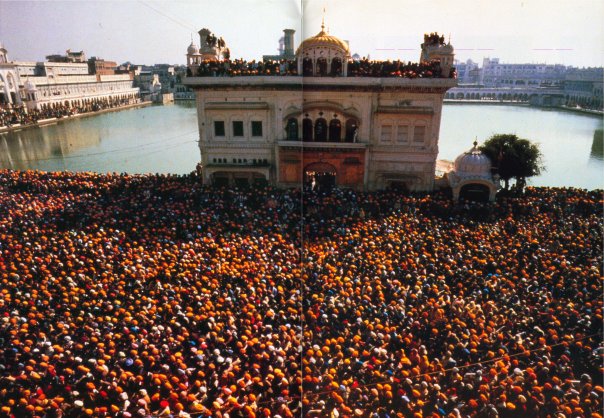
Though the venue of the Sarbat Khalsa has not been announced yet but it is most likely to be held at Akal Takht sahib in the Golden Temple complex which is considered to be a territory of the SGPC task force but as per the last Sarbat Khalsa's resolution, SGPC is a non-entity for them but I believe that SGPC is important to carry out the day to day activities and the maintenance of the holy shrines. Hence, I can foresee a huge congregation at the event and heavy deployment of police and para-military forces around Sachkhand Sri Harmandar Sahib.

I'm sure that some really aggressive decisions are likely to be announced at the congregation and it will be interesting to see how aggressive they can get. One such resolution that is likely to be passed is "Ostracism of Parkash Singh Badal from Khalsa Panth or Scrapping away the honor of "Panth Rattan" from him". Another aggressive decision could be "Scrapping away the title of "Jathedar" from Giani Gurbachan Singh, an alleged Badal loyalist." But if I'm allowed to give an honest opinion on this subject, I do not want to see any social unrest or ruthless courage to be shown at the gathering. The entire Sikh diaspora and the Khalsa Panth should realize that the whole world will be having eyes on us and we need to pass resolutions which are in the greater interest of humanity and not just sikh community or Khalsa panth and our ethics, morality, long-term vision and foresight should be reflected from those resolutions. Hence ''Sarbat Khalsa" should not be reduced to just a ceremonial event which is low on substance and high on flamboyance. Though I'm not affiliated to any political party or a right-wing "Jathe-bandi" but I'm just a concerned sikh about my community trying to do something for its welfare by writing this article.

On Gurmeet Ram Rahim, I want to say that both the Indian and the NRI sikhs should realize how regressive is the state of affairs in Punjab where "religion and spirituality" is still, one of the most lucrative industries and cult leaders like Gurmeet Ram Rahim are still among the economic elites of Punjab. I've written an article dedicated to this subject and the link is:

http://mysikhism.blogspot.in/2015/04/cult-leaders-economic-elites-of-punjab.html

Though I have also mentioned about the other Deras like Nirankaris operating in Punjab which are even more powerful than Dera Sacha Sauda but something which is worth mentioning here is that in any industry an upcoming product or a brand is subject to criticism, once it gets established it is never challenged by anyone. The same has happened here but as a collateral damage some people have even lost their lives in order to provide resistance to the uprising of these Deras and it's upsetting to see their deaths going in vain. 

During Baptism, every sikh is educated about a few institutions that he has to boycott and these deras lead that list. But I want to convey a message to all the separatists who believe in Khalistan- Somewhere in my heart I believe that Khalistan is a fantasy that may come true one day but why is it that the struggle to attain it gets diluted every time ?? I don't think that this movement which otherwise has some substance attached to it gets diluted by unnecessary violence or assassinations.

Now looking at the picture from the perspective of being a sikh as well as an Indian, I don't need to live in dilemma about whether to support the separatists or whether to support nationalist forces. Being a rational human being, I would support logic and my religious sentiments make sure that I stay sensitive to my own and other people's religious beliefs. As an Indian, I know that there are many extra-constitutional authorities that operate in the Indian polity and as a sikh I ask that question to myself "why can't Akal Takht be one of them" ?? As an Indian I know that Khalsitan is a demand of separatists and has little rational value in our lives and there are many ambiguities in multiple theories floating about Khalistan, but as a sikh, why can't I convince my fellow sikh brothers to shed-off that spirit of separatism or come out with a crystal clear theory of Khalistan ?? As an Indian I know that government holds the power to arrest anyone indulging into anti-national activities and it's always a bad idea to mess with the government, but as a sikh, I know that there are my fellow community brothers sitting on very high constitutional offices of the government and they will save me in the name of the community when I need them ??

On the whole if we take pride in being Indians, we have the right to take pride in being sikhs and we can think and contribute for the betterment of our community whether we are in or out of the government. Hence, it is my heartiest wish to see everyone shedding-off their differences, getting along and making "Sarbat Khalsa" constructive and successful to pave way for a better future for our community and the rest of the world.


Thursday, July 9, 2015

Lesser known Visionaries


It is a great challenge for me as a writer to draw a snapshot of some very revered visionaries of the sikh community and project their visoin in a way understandable the non-sikh world as well. I don't feel shy to announce that I've been deeply influenced by Bhai Rama Singh ji's work "Roop Gobind da... Ral Khalse da.... Sikka Sone da" and Bhai Randhir Singh ji's work "Andithi Duniya- The mystical invisible world". And the experience of reading and feeling these books is really worth sharing.

Bhai Rama Singh ji's work has been made available with the title "In search of the True Guru" as the English translation of it, but I read its Punjabi version. Both English and Punjabi titles somewhere change the context and presumption of the content of the book itself.


Though from the mystical perspective, such works should not be critically examined but I would definitely like to point out things that I found interesting in a totally positive context. One such thing is that Bhai Rama Singh ji has been a man of God throughout his life and has shown great enthusiasm to enchant the name of God since the tender age of 8 years. The best part is that he hasn't concealed any facts in his book about his family background and the belief system of his parents. According to the book he belonged to a Hindu family and was a clean shaven youth until his 20's and used to enchant the name of god as "Hare Rama... Hare Rama...". He has even stated that his father consulted a horoscope as he was worried about his future but found out that he was born to enchant the name of the the lord and travel places throughout the globe. Though his passion for enchanting the name of the true lord and his quest for finding the true guru was settled with his exposure to sikhism. He not only became a devout sikh but a renowned preacher who devoted his life in propagation of sikhism and the message of sikh Gurus throughout the world. His mystical experiences, visions and dreams that he has shared in his book are really inspiring and one such vision is that of the "Khalsa Raj" in the last chapter. Though he hasn't talked much about the political apprehensions or the state of governance in Khalsa Raj but he has drawn a snapshot of the achievements of the Khalsa in various fields especially philanthropy and somewhere his vision seems a bit fantasized as he has drawn a picture too rosy and hasn't talked much about he ground realities of Indian/ Punjab polity.

Bhai Rama Singh ji has also shown his great reverence for Bhai Randhir Singh ji in his book as he is considered to be an authority in the field of  traditional sikhism called "Sanaatan/ Puraatan Sikhi" in Punjabi. Thinkers like Bhai Randhir Singh ji gave a completely different dimension to sikhism by writing over 20 revered books on sikh mysticism and spiritualism that helped in the transition of the community's image from being the martial race to the one with the intellectual prowess as well.


Though I have read the English translation of "Undithi Duniya", it would be very difficult for the contemporary Punjabi youth to read and comprehend his work in Punjabi because the modern language of Punjab has 30-40 % influence of the English language accounting to the IT revolution that the world has seen. But sticking to his work, the technicality with which he has executed his writings cannot be expected from the modern day preachers and requires a huge amount of religious acumen to be understood. The list of Bhai Sahib's works is shown below.


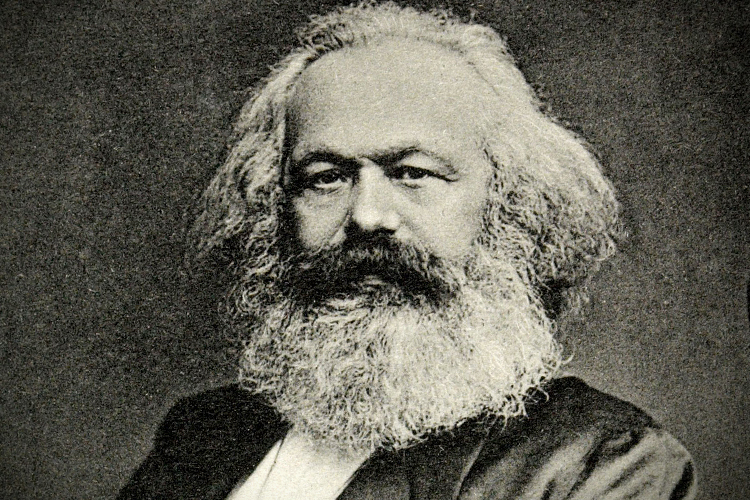
Though both the thinkers I have mentioned about in this article have relied heavily on their other-worldly experiences and visions but somewhere we too believe in the presence of the other world but the level of our sensitivity to the other-world is no where close to these thinkers and visionaries. It is also worth mentioning here that there is already a trust in the name of "Bhai Randhir Singh ji" and there are people who have already devoted their lives to his vision and also Bhai Rama Singh ji's vision. But, the recognition at the global level hasn't been equal to the other non-sikh renowned thinkers like Karl Marx.


Though I personally feel that Karl Marx gave some very powerful theories regarding religion, capitalism, socialism and his vision of a "Communist society" was revolutionary but I never feel like devoting my life to his vision. Some hardcore religious thinkers reject his theories out-rightly stating that they lack sensitivity and spiritual insight but they never see his theories operating in the religious shrines as well. The flow of money and commercialization of Gurudwaras show the practicality and logic behind his theories.

I would wind up this article by simply writing down my innermost feelings about the well-being and the longevity of the "Khalsa panth" and a hope to see the evils, that have crept in, getting destroyed. The onus is on the sikh youth especially in Punjab, to find the middle path.

Friday, July 3, 2015

Projection of Sikh personality in the media


This is one of the most hotly debated topic in the Sikh diaspora across the globe. We must have a clear vision before proceeding with the article that it is always good to have a balanced and a neutral opinion not favoring any particular side.Thinking logically may prove to be practical for ourselves but a little blunt to the people and personalities I'm going to talk about, but it will be of immense worth to the intellectuals reading this article for having a concrete opinion.


Let  me start with a singer-turned-actor who has made a big name for himself in a short span. Diljit Dosanjh started his career as a singer who turned to acting later and made it big in show-business. However, even he may be a bit embarrassed to see his own videos from his first album "Pyaar daa Oora Aira"  released around 14-15 years back. After his success from "Jatt & Juliet" series, he won critical acclaim for "Punjab 1984" and has turned out to be a rare turbaned-celebrity of a very powerful stature with a fame acknowledged across various nations.

However, an improved projection of sikh identity in films cannot be attributed to celebrities and actors alone. All the people who protested against the buffoonery image of sikhs in films deserve the credit. One such organisation that fought for the better projection of sikhs in the media was APKF (Akaal Purakh Ki Fauj) with the leading face of 3-time member of SGPC- Jaswinder Singh Advocate.


APKF organised Mr. Singh International event four times in 2005, 2007, 2009 and 2012 where thousands of sikh boys participated and brought forward four winners i.e. Harpreet Singh, Parmeet Singh, Damandeep Singh and Tajinderpaul Singh respectively. Only Harpreet Singh successfully hunted the job of news-anchor in PTC and Damandeep Singh got a few endorsements of various brands. But none of the winners or participants could turn into a successful celebrity who could create fortunes through show-business. Though APKF claims that their main motive was religious and wanted a more dignified projection of sikhs in the media, the question remains that does APKF feel a sense of achievement after the success of Diljit Dosanjh ??

Besides Diljit, there are many turbaned sikhs in the industry who have adopted singing and acting as a full time profession. Inderjit Singh Nikku, Ravinder Garewal, Ranjit Bawa, Malkit Singh are a few good examples. Daler Mehandi is also a good example if we look beyond Punjabi film industry. Though the main issue with all these singers is that none of them are "Saabat-surat" sikhs (Sikhs with fully grown beards). Though, it is worth mentioning here about a celebrity singer who became famous when he was clean-shaven but later on grew his beard, started wearing a turban and became a fully baptized sikh. KS Makhan has set an example of its kind.


Though the frequency of his albums has drastically reduced after he became a fully baptized sikh, he never talked much about his experiences and feelings that made him change his mind about his way of life. Though, it is also worth mentioning that his entire family including his parents and children are fully baptized sikhs. Besides KS Makhan, I've personally noticed many people posting the photos of their personal transition on social networking websites. But the question that haunts my mind is that whether such transition is permanent or reversible over a period of time and if it is permanent, I'm sure KS Makhan must be feeling privileged or must be enjoying a privilege. Of course, change of heart and feelings cannot be termed as "Opportunism" but some conservatives even believe that Diljit would have a similar transition one day. God know why ?? If someone has become very successful in one way, why would he change the way he looks or why would he change his lifestyle?? But the way Diljit is strongly marching ahead, I don't expect any "Change-of-heart" ("Hirday-Parivartan") from him at least for the next 20-25 years.

Though both the phenomenons i.e. Conservatism and Modernity are at the loggerheads, most of the time, they have also shown a great sense of co-existence since the inception of the society. Sikhs should understand that both conservatism and modernity working in tandem can help us have a better projection of ourselves globally in the media as well as out of it, in real life. Even in the remotest of the remote village in Punjab, we can spot on these two phenomenons co-existing e.g. a clean shaven child of baptized parents living with them. Then why can't such people co-exist on public platforms ?? E.g. (Mark my words) Diljit will never be honored on a religious platform, even on the stage of Mr. Singh International (in case it is organised again). If it happens, I'll genuinely be the happiest person, because I believe in peace and co-existence. But I'm sure that fanaticism on one side and egomania on the other side, won't let me be happy so easily :-)

It is worth mentioning of another "Saabat-surat" sikh who dared to enter show-business as a leading actor and featured in a few films -Manpreet Singh Banga.


Though Manpreet gave a reasonable performance in Punjabi films like "Sat Sri Akaal", he totally disappeared from the screen after the film "Chheva'n Daryaa" and for sure, couldn't achieve fame and stardom like Diljit or anywhere close to him. Though he has been very active in promoting the sikh identity by organizing various pageants like "Mr. Singh India" which are definitely of a smaller stature and are less competitive than "Mr. Singh International". I can authorize this claim being a finalist of Mr. Singh International 2009 myself where I met the winner of "Mr. Singh India 2009" as a co-finalist and various other "saabat-surat" sikh boys pursuing modelling seriously.

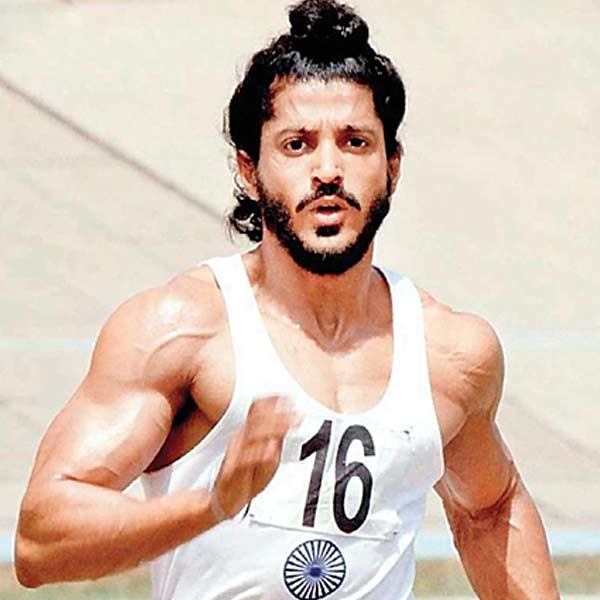
Now, the gist of the article is that all the people whom I have mentioned as yet, though belong to a completely different sphere, have a common belief system and share a religious affiliation. But how can a media-savvy person forget about the contribution of non-sikh actors in projection of a sikh-personality on screen. The names are enough if I talk about Akshay Kumar's work in "Singh is King" and Farhaan Aktar's work in "Bhaag Milkha Bhaag".


Though "Singh is King" was highly criticized by the sikh hardliners on the projection of sikh-identity, "Bhaag Milkha Bhaag" didn't attract much controversy being a biopic. Something in common about both the films besides having a sikh character as a protagonist is that both these films crossed 100-crore mark at the box office. Now this is the critical issue that needs to be addressed w.r.t the Punjabi film industry.... Budget !!

Though I'm not a film-crazy person but even if someone having a good general knowledge keeps himself active while coming across the box-office collections of Punjabi films, Bollywood films and South Indian films, and does a comparative analysis of the same, the reality of Punjabi cinema would stare right in your face. The cost of the most expensive Punjabi film till date has been 14-15 crores and the total revenue (including overseas) has been around 50 crores. And now kindly consider the figures of Bollywood and Tollywood films where the input cost for some projects goes to a whooping 100-150 or even 200 crores and the total revenue collected sometimes touches 500 crores e.g. PK. These figures are worth mentioning from the perspective of development and industrialization. If we think that Punjabi film industry is very flourishing and lucrative and is a dream destination for many aspiring actors and artist, why is that the economics is leading us to a different conclusion ??

Where Bollywood mega-stars make huge fortunes from the films and endorsements of various brands, Punjabi mega-stars like Diljit are busy creating fortunes from their overseas shows by capitalizing on their singing talent. Though these celebrities (both Punjabi or Non-punjabi) are in no dearth of money or resources, let me say it firmly for one time that "Sikh identity" is an issue about which actors can do absolutely nothing accounting to their duplicity and superficiality. If we turn to politicians, they're already there to take credit of even what the actors are doing. I simply do not want to get into the technical detail about the constitutional amendment required to empower the "sikh identity" which has its vulnerability exposed in the age of media and Information Technology.


Saturday, June 27, 2015

SIMRAN


In Sikhism, it is very interesting to make a differentiation between "Jap" and "Simran". Though in English language, "Jap" would simply mean enchanting the name of God and "Simran" would mean contemplating on it. Sikhism teaches us to meditate on the holy word "Waheguru" which is also referred to as a "Guru-mantra". Some preachers emphasize on the word "Waheguru" as an acronym with the following expansion:
Wa - Vishnu
He - Hare Krishna
G - Gobind
R - Raam

This expansion is interesting because all the prophets mentioned belong to different ages or "yugs" of Indian mythology which classifies the time into four "Yugs".
1) Sat-yug
2) Treta-yug
3) Dwapar-yug
4) Kali-yug

Each yug has different timeline and age and also different messiahs or "Avatars". Though one year of demigods or "Devtaas" is equal to 360 years of humankind, hence the age of different yugs can be calculated as:

Satyug - 48000 x 360 = 1,72,80,000 years
Tretayug - 36000 x 360 = 1,29,60,000 years
Dwaparyug - 24000 x 360 = 86,40,000 years
Kaliyug - 12000 x 360 = 43,20,000 years

Though all these yugs have a specified timeline and are assumed to occur in circulation, realization of GOD is considered easiest in Kaliyug- "The Dark Age" which is currently going on. And the way of realizing god as recommended by most of the prophets of various religions is by meditating on his name.

In Sikhism, some devotees practice a very powerful and effective technique called "Swaas-Giraas Simran" which is often propagated by various "Jathas". In this technique, the word "Waheguru" is bifurcated into two words i.e. "Wahe" or "Wah" + "Guru". In order to preform "Swaas-Giraas Simran" one must inhale with the sound of "Wah" and exhale with the sound of "Guru". On repeating this process consciously for some time, one realizes that the human body automatically responds to this word and a sound of "Wah" or "Wahe" is produced while inhaling breath with full vigor and the sound of "Guru" is produced while exhaling breath with the same amount of vigor.

One simply needs some practice to adopt this technique for changing his/ her life as it is a very useful technique for meditating on lord's name and practically too, it's a wonderful stress buster. One could experience the universe within oneself with the help of this technique. It is definitely worth trying and adopting for a better and more spiritual life.

Sunday, June 7, 2015

Money & Wealth in Sikhism

This is the issue around which the modern day life revolves. How to make money ?? How to accumulate wealth ?? And we're so much dipped in earning our livelihoods and paying our bills that we have no time to sit and think which way our life is going. Though religion has a primary role in giving a purpose and a direction to human life, it certainly has laid down some guidelines for its followers about making money and accumulating wealth. Usually, sikhs in general think of having money as a positive thing and simply call it "Babe di kirpa" as it is generally believed that more the money, more is the "kirpa" but once having understood the technicality of Sikhism, this notion gets mirror opposite. Money or wealth are usually referred to as "Maya" in both Sikhism and Hinduism, though "Maya" is a much wider term and in technical terms means something which creates illusion or an illusion itself. So, can we consider wealth as something which creates an illusion ??

Actually, this topic is very well studied and analysed by eminent sociologists like Karl Marx and Max Weber and there are various sociological facts that can be stated in detail to elaborate on this topic but I would prefer to keep things more generalized in order to make the issue interesting and widely discussed.

Though Guru Nanak did teach us about making a truthful living by saying "kirat karo" or "dasaa'n- nauaa'n di kirat karo" but Sikhism is a religion that believes in the "other-worldly asceticism" just like Hinduism and Islam. Though we can also say that Sikhism teaches one to live a truthful life and the way baptized sikhs live is really austere and constrained as they are taught to live a simple life, away from glamour and extravagance, focusing more on the needs of oneself and the family. Ideally, a sikh should be selfless in spending his money and should give priority to the needs of his family and should also give away one-tenth of his earnings (called "Daswandh") for religious cause. "Daswandh" is similar to the concept of "Tithing" in Christianity where the followers (Catholics or Protestants) are instructed to give one-tenth of their earnings for the Church or the Cathedral. Unlike the Eastern philosophies Protestantism believes in "this-worldly asceticism" where protestants are instructed to consider work as worship and live a life of austerity in order to create and accumulate wealth and create the "Kingdom of GOD" on this world through their righteous earnings.

Though Sikhism has the features of both "this-worldly" as well as the "other-worldly" asceticism, there are verses in Gurbani which consider the accumulation of wealth as a sin. On Page 417 of Sri Guru Granth Sahib, it is stated that:

ਇਸੁ ਜਰ ਕਾਰਣਿ ਘਣੀ ਵਿਗੁਤੀ ਇਨਿ ਜਰ ਘਣੀ ਖੁਆਈ ॥
ਪਾਪਾ ਬਾਝਹੁ ਹੋਵੈ ਨਾਹੀ ਮੁਇਆ ਸਾਥਿ ਨ ਜਾਈ ॥
For the sake of this wealth, so many were ruined; because of this wealth, so many have been disgraced.
It was not gathered without sin, and it does not go along with the dead.

Hence, we can conclude that the accumulation of wealth somehow carries a negative notion as per the religion. Some eminent sociologists like Marx and Weber did conclude that  the religion of the Indian subcontinent i.e. Hinduism primarily is not fit for the framework of Capitalism hence, India needed some exposure to the protestant ethics of Christianity to open doors for Capitalist economy. And in Sikhism, we have also seen the growing tolerance for Capitalism as there are some highly successful capitalists who have huge fortunes amounting to even hundreds or thousands of crores living within and outside India. And surprisingly, these capitalists having huge fortunes have much more say in the working of religious or political institutions. In sikhism, Gurudwaras or the community centers are the places where religion and politics converge. This indicates that Sikhism is somehow losing its democratic or egalitarian spirit where a common sikh, not having huge fortunes is finding it hard to make his/her voice heard even in the day-to-day panthic affairs.

In order to reflect a real life picture, it is worth mentioning here about the sycophancy and favoritism of the managing committees of the religious shrines for the rich and powerful. Actually, they're more concerned with the monetary offerings at the temples or gurdwaras regardless of the religion being critical of wealth as it can cover-up all the worldly-sins committed in order to accumulate it. In the end, I would say that the need of the hour is to strike the right chord and find a balance in the governance of the holy shrines where everyone has the right to contribute and have a say, regardless the size of his/ her fortune.